


So, we have results for a Thermalright fan. While the first attempt (or second, if we count the now-discontinued model X-Silent 120) didn’t quite hit the mark, it’s probably fair to say that this is a more attractive option than the Scythe Kaze Flex II 120. Yes, these two fans are being directly compared because they share an unusual trait – they spin in the “reverse” direction, from left to right. And as you know, most fans spin the other way…
Explanatory note: The method for measuring vibration intensity has been previously described in the testing methodology section. Here, we clarify the term “aggregate vibration.” In order to be able to interpret the motion in the three axes (X, Y, Z) as simply as possible, with a single number, we consider the individual axes as vectors and calculate a so-called 3D vector from them. A more detailed account at the level of the individual axes is provided in the next three chapters of this article.
Why is a value sometimes missing for a fan? There can be several reasons. Most commonly, it’s because the fan couldn’t be regulated to the target noise level. Some fans have higher minimum RPM (or they spin slowly but have an excessively noisy motor), or they are simply slower models that can’t reach higher decibel thresholds. Results are also omitted from graphs if the impeller scrapes against the mesh of a nylon filter. In such cases, we classify the combination as incompatible. And of course, a zero in the graphs naturally appears in situations where we record an actual 0.00. This often occurs at extremely low speeds when obstacles are present or during vibration measurements.
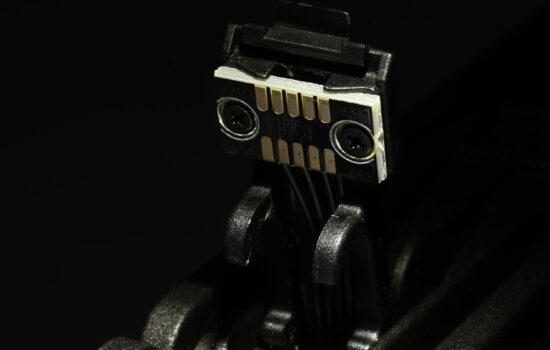




A potentially huge problem for this fan is its longevity. I’ve seen quite a number of reports of them failing in large numbers only after a few months of usage, presumably due to bearing failure. Have you seen any signs of this happening on your units?
Even when ignoring this issue, I don’t see it being particularly competitive vs fans like Endorfy Stratus and Arctic P12. While airflow per price vs no obstacles is high, but the value decreases greatly if you look at airflow per price vs radiators, for example.
Even though I cannot assess longevity, I can assess the ratio of airflow to price. And especially when it comes to the ratio airflow to price on radiators, this ratio speaks in favor of the TL-C12C compared to the Stratus. The P12 is from another world, nothing can be compared to it 😀 . Moreover, I counted with the price that Ľubo states in the specification (in €). If we took the price of a three-pack even the P12 would sweat.
Every dBA lvl – https://imgur.com/bhNPXyJ
Average – https://imgur.com/G8EmutF
I would say that overall the TL-C12C is quite comparable to the Stratus (except for the lifespan, which I can’t assess). 😉
Here are the current best prices from geizhals.de (19-6-2025, 9:30 am)
https://imgur.com/ppoJbo2
Yes, the price of the TL-C12C in the triple pack is extremely attractive. However, I assume that a fan hub will not be included in the standard accessories, as is sometimes the case with more expensive models. Here it will probably rely on the possibility of daisy-chaining and connecting all three fans to one header on the motherboard or case (if the case has its own hub). 🙂
You’re right, I was not aware of the fact that the triple pack is priced so low. If C12C works well long term, I can see them being quite attractive.
Good point. Unfortunately, we cannot assess lifespan. I’ve played around with the idea of creating some form of methodology based on “accelerated aging”, but under our conditions, that would not be easy… Recently, my colleague and I talked about fluid dynamic bearings and yes, the quality level can vary. This is also reflected in the wide range of MTBF/MTTF values… so yes, in the case of the TL-C12C, it’s probably a bit weaker here, but that probably also applies to the Stratus 120 PWM fans. Those are also low-end, but aerodynamically excellent, and I think both deserve the Smart Buy! award (the fans). Arctic P12, as Bufo points out, is “from another world”, but we should keep in mind that this might not be the case for much longer. It depends on how long Arctic continues to sell and supply them to third-party retailers. 🙂
According to this source, the “S-FDB” aka “Stably-Fluid Dynamic Bearing” is just a rifle bearing with a 20k hr MTTF… That could explain the poor longevity.
https://en.namu.wiki/w/Thermalright/%EC%BF%A8%EB%A7%81%ED%8C%AC
Thanks for the clarification. You’re right — not all FDBs are created equal. That’s also why the range of MTBF values (with FDB) is so wide. 🙂
as one fictional character said 😉
Bearing is bearing.
Rifle, Fluid, Hydro …
Makes no difference.
The degree is arbitrary.
The definition’s blurred.
or something like that … 😀
(message for Ľubo…you don’t have to resolve the differences…this is just for relief) 😀
Just want to say THANK YOU! This info doesn’t show up anywhere nor prominently in search engine results when researching lifetime of these Thermalright fans. Now it also makes sense why the E12B V3 model stops after 4 seconds on max RPM when the power is cut. With an Arctic P14 I saw it’s over 12 seconds. Makes sense now. Feeling pretty disappointed how misleading Thermalright is with the “FDB” claim…