


So, we have results for a Thermalright fan. While the first attempt (or second, if we count the now-discontinued model X-Silent 120) didn’t quite hit the mark, it’s probably fair to say that this is a more attractive option than the Scythe Kaze Flex II 120. Yes, these two fans are being directly compared because they share an unusual trait – they spin in the “reverse” direction, from left to right. And as you know, most fans spin the other way…
Measurement of static pressure…
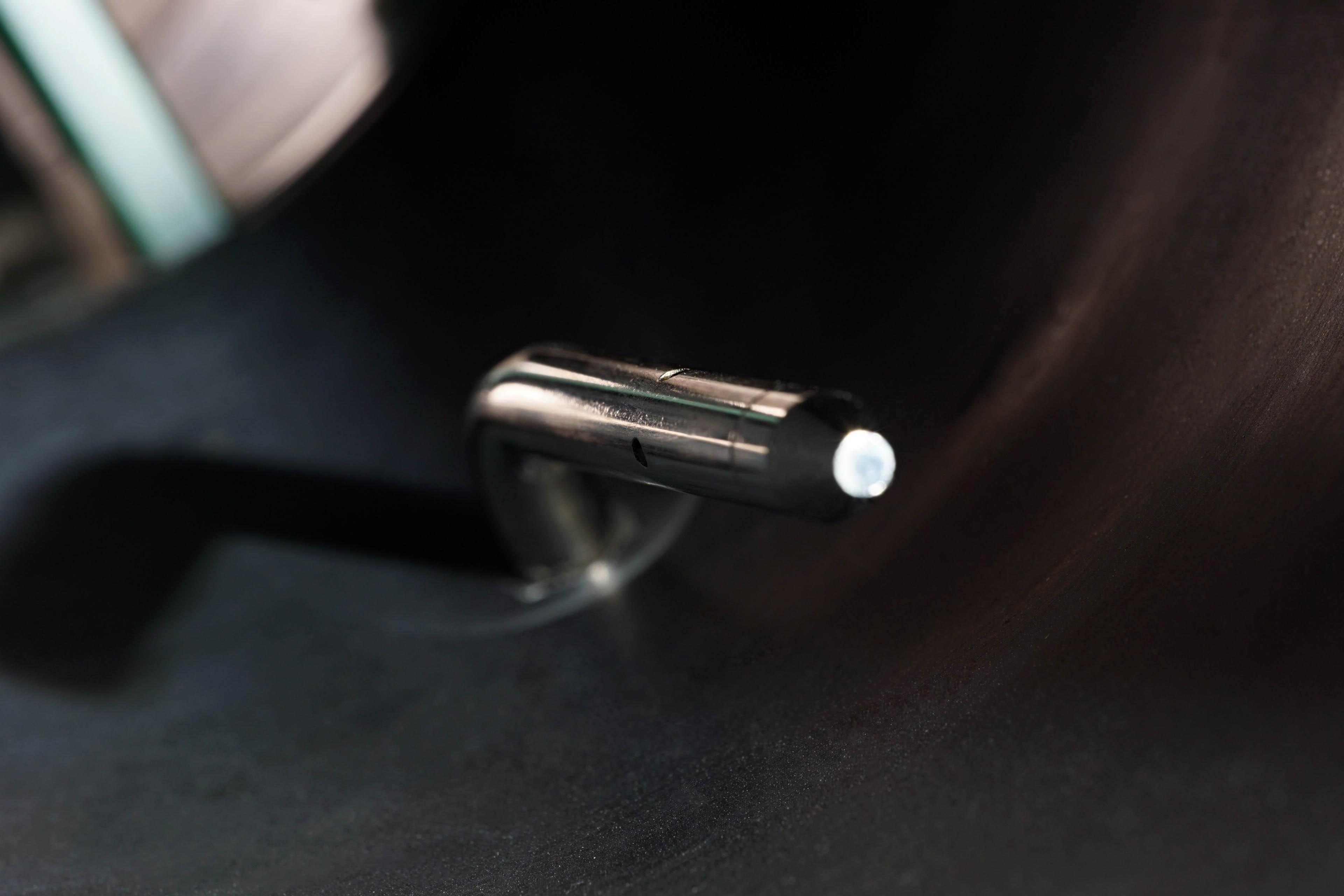
Finally, it is time to move further down the tunnel a bit. Just behind the fan is a static pressure sensing probe. Its position has been chosen with maximum measurement efficiency in mind. In other words, the sensors are placed at the points of highest pressure (although this is virtually the same everywhere in the unconstrained part of the tunnel).
The Fieldpiece ASP2, which is connected to the Fieldpiece SDMN5 manometer, is used to measure the static pressure in the tunnel. The latter also allows measurements in millimetres of water column, but we measure in millibars. This is a more finely resolved base unit for this meter. And only from there we convert the measured values into mm H2O to allow easy comparison with what the manufacturers state.
While we wrote when measuring noise levels that our results could not be compared with the parameters, that is no longer the case here. As long as the fan manufacturers do not embellish the parameters, they should quote approximately the same pressure values as our tests show. The most significant deviations can only arise at the level of varying accuracy of the measuring instruments, but these are negligible percentages.
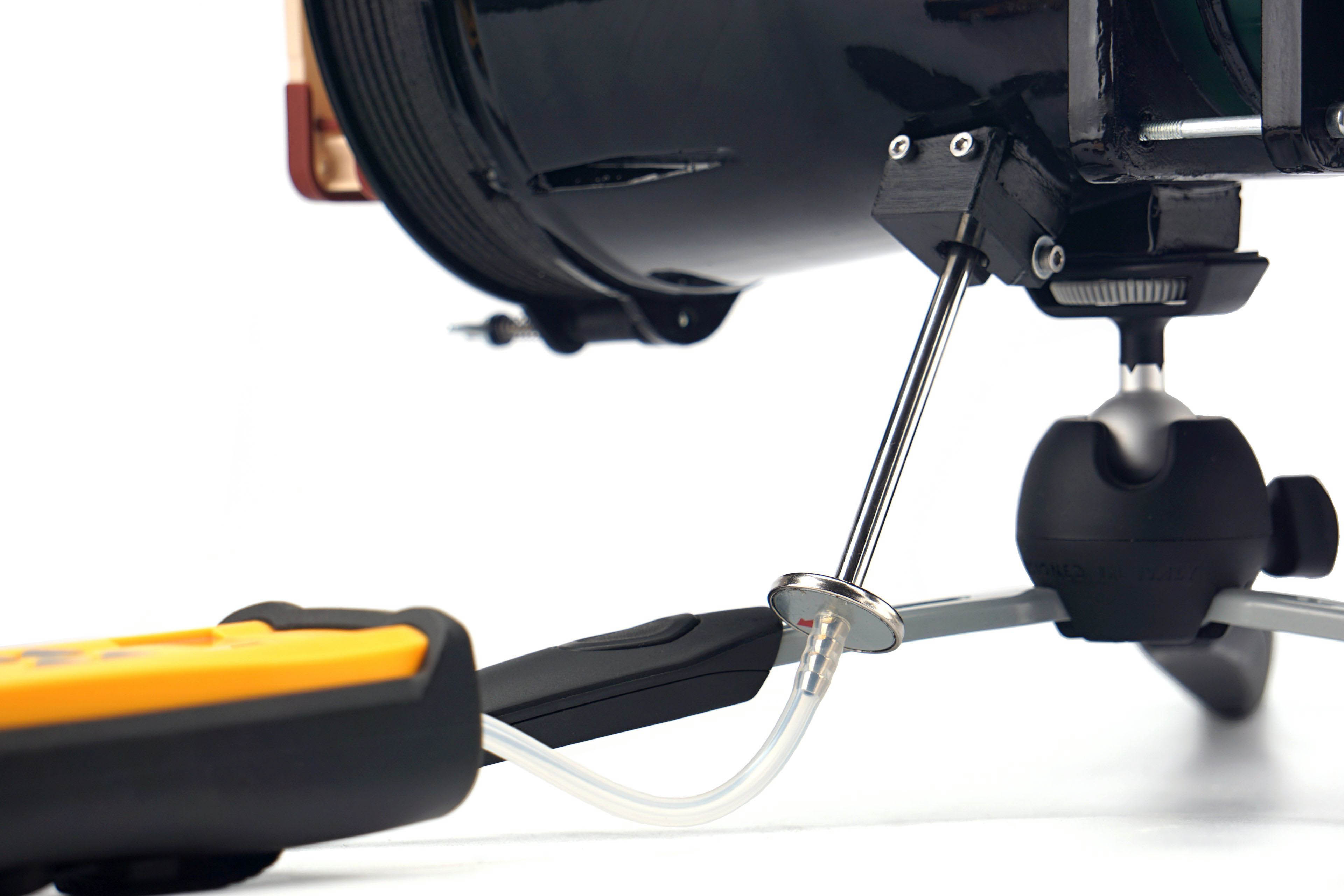
The greater the difference between the manufacturer’s claimed values and ours, the less the specifications correspond to reality. If the claimed values are significantly higher, it is certainly an intention to artificially give an advantage to the fans on the market. However, if the manufacturer quotes a lower pressure value than we do, it points to something else. Namely, a weaker tightness of the measuring environment. The less tight the tunnel is, the lower the pressure you naturally measure. This is one of the things we tuned for an extremely long time, but in the end we ironed out all the weak spots. Whether it’s the passage for the probe itself, the flanges around the anemometer, even the anemometer frame itself, which is made up of two parts, needed to be sealed in the middle. Finally, the flap at the tunnel outlet must also be perfectly tight. That’s because static pressure has to be measured in zero airflow.
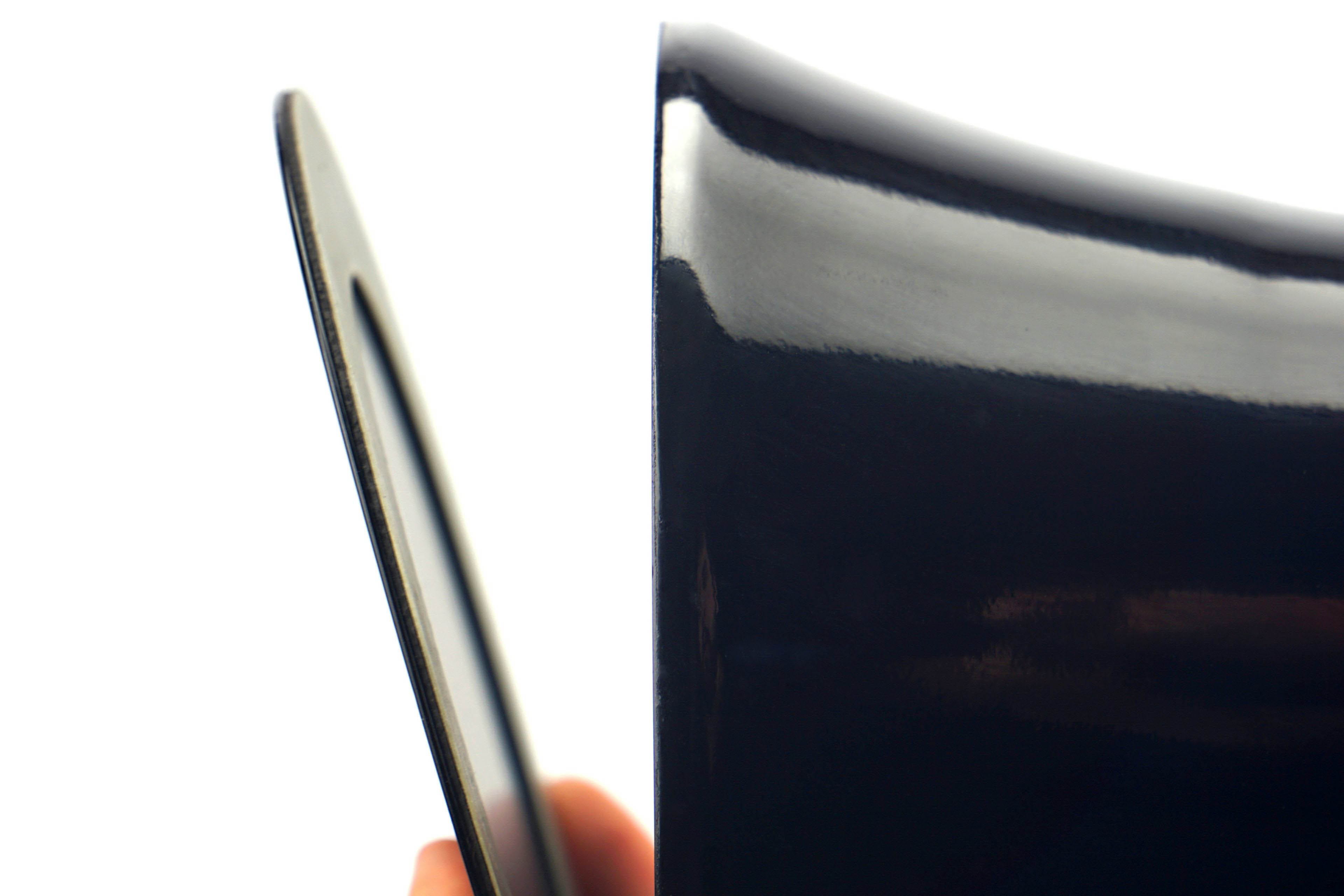
But there is one thing that often lowers the pressure of the fans a bit. And that’s protruding anti-vibration pads in the corners or otherwise protruding corners. In other words, when the fan doesn’t fit perfectly to the mounting frame at the inlet, and there are small gaps around the perimeter, that also affects what you measure. But we have not gone into this because it is already a quality feature of the fan. In the same way, it will “stand out” and perform a bit weaker than it has the potential to do with better workmanship, even after application by the end user.




A potentially huge problem for this fan is its longevity. I’ve seen quite a number of reports of them failing in large numbers only after a few months of usage, presumably due to bearing failure. Have you seen any signs of this happening on your units?
Even when ignoring this issue, I don’t see it being particularly competitive vs fans like Endorfy Stratus and Arctic P12. While airflow per price vs no obstacles is high, but the value decreases greatly if you look at airflow per price vs radiators, for example.
Even though I cannot assess longevity, I can assess the ratio of airflow to price. And especially when it comes to the ratio airflow to price on radiators, this ratio speaks in favor of the TL-C12C compared to the Stratus. The P12 is from another world, nothing can be compared to it 😀 . Moreover, I counted with the price that Ľubo states in the specification (in €). If we took the price of a three-pack even the P12 would sweat.
Every dBA lvl – https://imgur.com/bhNPXyJ
Average – https://imgur.com/G8EmutF
I would say that overall the TL-C12C is quite comparable to the Stratus (except for the lifespan, which I can’t assess). 😉
Here are the current best prices from geizhals.de (19-6-2025, 9:30 am)
https://imgur.com/ppoJbo2
Yes, the price of the TL-C12C in the triple pack is extremely attractive. However, I assume that a fan hub will not be included in the standard accessories, as is sometimes the case with more expensive models. Here it will probably rely on the possibility of daisy-chaining and connecting all three fans to one header on the motherboard or case (if the case has its own hub). 🙂
You’re right, I was not aware of the fact that the triple pack is priced so low. If C12C works well long term, I can see them being quite attractive.
Good point. Unfortunately, we cannot assess lifespan. I’ve played around with the idea of creating some form of methodology based on “accelerated aging”, but under our conditions, that would not be easy… Recently, my colleague and I talked about fluid dynamic bearings and yes, the quality level can vary. This is also reflected in the wide range of MTBF/MTTF values… so yes, in the case of the TL-C12C, it’s probably a bit weaker here, but that probably also applies to the Stratus 120 PWM fans. Those are also low-end, but aerodynamically excellent, and I think both deserve the Smart Buy! award (the fans). Arctic P12, as Bufo points out, is “from another world”, but we should keep in mind that this might not be the case for much longer. It depends on how long Arctic continues to sell and supply them to third-party retailers. 🙂
According to this source, the “S-FDB” aka “Stably-Fluid Dynamic Bearing” is just a rifle bearing with a 20k hr MTTF… That could explain the poor longevity.
https://en.namu.wiki/w/Thermalright/%EC%BF%A8%EB%A7%81%ED%8C%AC
Thanks for the clarification. You’re right — not all FDBs are created equal. That’s also why the range of MTBF values (with FDB) is so wide. 🙂
as one fictional character said 😉
Bearing is bearing.
Rifle, Fluid, Hydro …
Makes no difference.
The degree is arbitrary.
The definition’s blurred.
or something like that … 😀
(message for Ľubo…you don’t have to resolve the differences…this is just for relief) 😀
Just want to say THANK YOU! This info doesn’t show up anywhere nor prominently in search engine results when researching lifetime of these Thermalright fans. Now it also makes sense why the E12B V3 model stops after 4 seconds on max RPM when the power is cut. With an Arctic P14 I saw it’s over 12 seconds. Makes sense now. Feeling pretty disappointed how misleading Thermalright is with the “FDB” claim…